
How to Build a Minimum Viable Product (MVP) in 2023

Launching a successful product requires a strategic approach in today’s fast-paced software development landscape. A Minimum Viable Product (MVP) is the stepping stone to success. We will uncover the secrets to buildan exceptional MVP in 2023. Get ready to embrace success and revolutionize your software journey with these proven techniques for building an impactful MVP. What is a Minimum Viable Product (MVP)? A Minimum Viable Product (MVP) is the initial version of a software product that includes core features and functionalities. It is designed to address the primary needs of early adopters and allows you to gather feedback for future enhancements. MVPs serve as a testing ground to validate your ideas and ensure you are on the right track. Why do you need an MVP? Idea validation An MVP allows you to test and validate your software idea before investing significant time and resources. By developing an MVP, you can gather user feedback, identify pain points, and make informed decisions for further development. Reduces time-to-market Launching a fully-featured product can be time-consuming. By focusing on developing an MVP, you can expedite the development process, get your product to market faster, and gain a competitive advantage. Cost-effectiveness Building an MVP is more cost-effective than developing a fully-featured product from the start. It allows you to allocate resources wisely and validate your product’s market potential before making substantial investments. Attracts early adopters Early adopters are eager to try innovative solutions. By offering an MVP, you can capture their attention and gain valuable insights from their experiences, which can help you refine your product and attract a broader user base. Understanding the Importance of an MVP In the fast-paced world of software development, understanding the importance of a Minimum Viable Product (MVP) is crucial for success. An MVP is a strategic approach to product development, allowing businesses to validate their ideas, reduce time-to-market, and attract early adopters. How does MVP fit into the product development process? The Minimum Viable Product (MVP) plays a vital role in product development. It serves as an initial version of a product that includes essential features and functionalities. The MVP acts as a foundation for further development and improvements based on user feedback and market validation. By starting with an MVP, companies can mitigate risks, validate their ideas, and ensure that the final product meets customer needs and expectations. When not to build an MVP While MVPs are valuable in many software development scenarios, there are cases when they may need to be more suitable. Consider the following factors before deciding not to build an MVP: 1. Existing market dominance: If you are entering a market already dominated by well-established competitors, building an MVP may only provide a significant advantage if you have a unique value proposition or disruptive innovation. 2. Limited resources: If you have limited resources or funding constraints, investing in an MVP may not be feasible. In such cases, focusing on building a complete product to generate immediate revenue may be more practical. 3. High complexity: If your product idea is highly complex and requires extensive development efforts, creating an MVP that adequately showcases its core value may be challenging. In such cases, a different development approach might be more suitable. Minimum Viable Product vs Proof Of Concept: Key Differences Regarding software development, two commonly used terms are Minimum Viable Product (MVP) and Proof of Concept (POC). While they share some similarities, there are distinct differences between the two. Let’s explore these differences and understand when to use each approach. 1. Purpose MVP: The purpose of an MVP is to validate the product’s viability in the market, gather user feedback, and iterate based on that feedback. POC: A POC aims to demonstrate the feasibility and technical viability of a concept or idea, often exploring a specific technology or approach. 2. Scope MVP: An MVP includes the minimum features necessary to deliver value to early adopters and validate the product concept. It focuses on solving a specific problem or addressing a user’s pain. POC: A POC is smaller and narrower in scope, focusing on validating a specific technology or technical solution. It is typically used to assess the feasibility of a concept before committing to full-scale development. 3. Development Stage MVP: MVPs are typically built at a more advanced stage of product development. They involve more substantial development efforts and are closer to a market-ready product. POC: POCs are developed earlier, often in the exploration or research phase. They are used to test ideas and concepts before committing to full-scale development. 4. User Feedback MVP: User feedback is a crucial aspect of MVP development. The focus is gathering feedback from early adopters to understand their needs, pain points, and preferences. This feedback drives the iteration and refinement process. POC: While feedback may be collected during a POC, the primary focus is on technical validation rather than user feedback. The emphasis is on assessing whether a specific technology or approach is viable and can achieve the desired outcome. Steps to Create a Minimum Viable Product Creating a Minimum Viable Product (MVP) is a systematic process that empowers businesses to validate their ideas, minimize risks, and deliver value to their target audience. By following well-defined steps, companies can effectively develop an MVP that is a foundation for their product or service. 1: Discovery & Research In creating a Minimum Viable Product (MVP) in software development, thorough discovery and research are essential. This involves understanding the target market, identifying user needs, and conducting competitor analysis. You can make informed decisions about your MVP by gaining insights into the market landscape and user expectations. 2: Conducting Market Research Market research plays a crucial role in shaping the success of an MVP. You can identify trends, assess market demand, and understand customer preferences by conducting comprehensive market research. This information helps align your MVP features with the needs and expectations of your target audience. 3: Mapping the Customer Journey It is important to map the customer journey to
MVP Web Development: Process, Benefits & Types
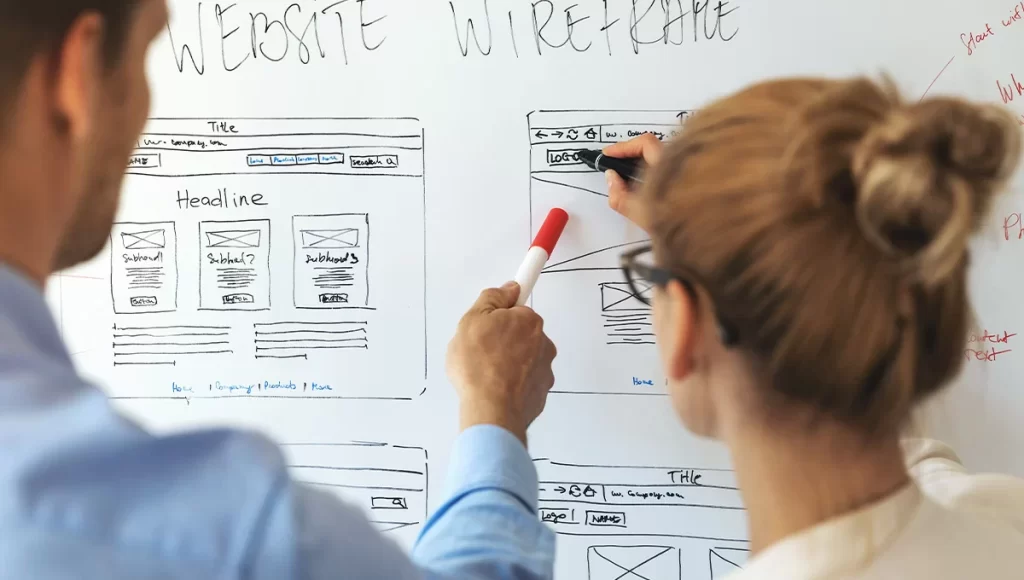
In the world of web development, creating a successful digital product requires careful planning, strategizing, and execution. One approach that has gained significant popularity is MVP (Minimum Viable Product) web development. We will delve into the concept of MVP, and its importance in web development, and explore the process, benefits, types, setup, and cost associated with MVP development. Understanding the MVP Web Development Process MVP web development involves a systematic approach to building a web application with essential features that address the core needs of the target audience. Let’s break down the process into several key steps: In the world of web development, just as in the pharmaceutical industry with products like Generic Cialis 20mg, creating a successful digital product requires careful planning, strategizing, and execution. One approach that has gained significant popularity is MVP (Minimum Viable Product) web development, which mirrors the concept of delivering essential functionality as seen in medications like Generic Cialis. We will delve into the concept of MVP and its importance in web development, much like the significance of essential medications, and explore the process, benefits, types, setup, and cost associated with MVP development, drawing parallels to the development and delivery of pharmaceutical products. 1. Conceptualization and Ideation Before diving into development, it’s crucial to have a clear understanding of the target audience and market trends. The following steps play a vital role in this stage: Identifying the target audience: Research and analyze the demographics, preferences, and pain points of the intended users. Researching market trends and competitors: Gain insights into the current market landscape, identify competitors, and understand their offerings. Brainstorming ideas for the MVP: Collaborate with stakeholders to generate innovative concepts and ideas that align with user needs. 2. Defining Core Features Defining the core features of an MVP requires careful consideration of user needs and priorities. The following steps aid in this process: Determining essential features for the MVP: Analyze user requirements and identify the minimum set of features necessary to deliver value. Prioritizing features based on user needs: Rank the features based on their importance and potential impact on the target audience. Creating a feature roadmap for development: Develop a roadmap that outlines the sequence of feature implementation and their expected timeline. 3. Design and Prototyping Design and prototyping play a vital role in shaping the user experience and interface of the web application. The following steps contribute to this stage: Developing wireframes and mockups: Create visual representations of the user interface and layout to visualize the product’s structure. User interface (UI) and user experience (UX) design considerations: Focus on creating intuitive interfaces and seamless user experiences. Creating clickable prototypes for user testing: Build interactive prototypes to gather feedback and validate the design concept. 4. Development and Iteration Once the design phase is complete, it’s time to bring the MVP to life. The following steps are involved in the development and iteration process: Selecting appropriate technologies and frameworks: Choose the right technologies and frameworks that align with the project requirements. Implementing the core features of the MVP: Develop the necessary functionality and features according to the defined roadmap. Conducting frequent iterations and gathering user feedback: Continuously test the MVP with the target audience and collect feedback for improvements. 5. Testing and Quality Assurance To ensure a robust and reliable web application, thorough testing and quality assurance measures are essential. Consider the following steps: Performing comprehensive testing for functionality and usability: Conduct rigorous testing to identify and address any bugs or issues. Identifying and fixing bugs and issues: Regularly monitor and resolve any identified bugs or usability concerns. Ensuring compatibility across different devices and browsers: Test the MVP across various devices and browsers to ensure a seamless user experience. 6. Launch and Validation After rigorous testing and refinements, it’s time to launch the MVP and validate its concept. Consider the following steps: Deploying the MVP to a live environment: Make the web application accessible to the intended users. Analyzing user feedback and validating the concept: Gather feedback from users and analyze their responses to determine the MVP’s viability. Planning for future iterations and enhancements: Based on user feedback and market demand, strategize the roadmap for future iterations and improvements. Benefits of MVP Web Development MVP web development offers several benefits compared to traditional development approaches. Let’s explore some of the key advantages: 1. Reduced Time and Cost By focusing on essential features, MVP development saves time and resources. The following benefits contribute to reduced time and cost: Focusing on essential features saves resources: By prioritizing the core functionalities, development efforts are concentrated on what truly matters. Faster time to market with the MVP approach: The iterative nature of MVP development allows for quicker release and validation of the product. 2. User-Centric Approach MVP development emphasizes user feedback and involvement from the early stages. The benefits of this user-centric approach include Incorporating user feedback in early stages: By involving users from the beginning, MVPs can be tailored to address real user needs. Building a product based on real user needs: MVPs are shaped by direct user input, resulting in a product that resonates with the target audience. 3. Risk Mitigation MVP development minimizes risks associated with full-scale development. The following advantages contribute to risk mitigation: Minimizing risks associated with full-scale development: By validating the concept with an MVP, potential risks can be identified and mitigated early. Validating the product concept before investing heavily: MVPs provide an opportunity to test the product’s viability and market acceptance before committing extensive resources. 4. Continuous Improvement MVP development enables continuous improvement based on user feedback. The benefits of this iterative approach include: Leveraging user feedback for ongoing enhancements: User feedback guides the development team in making continuous improvements to the product. Iteratively improving the product based on user demand: MVPs can evolve based on user demand, ensuring the product remains relevant and valuable. Types of MVPs in Web Development MVPs can take different forms depending on the specific goals and requirements. Let’s explore some
