
Why is MVP Agile Development so Effective?

The Agile methodology is considered a major changer in the rapidly growing environment of software development, giving a flexible and iterative approach to building software solutions. The concept of the Minimum Viable Product (MVP) is at the center of Agile, a strategic approach that has revolutionized the way software is built. What is an MVP in Agile Software Development? A Minimum Viable Product is a version of a new software product that includes only the essential functionality required to suit the needs of early adopters or target users. It’s a stripped-down version that serves as a functional prototype, allowing developers to gain useful feedback and insights before devoting significant time and resources to creating the full product. MVP (Minimum Viable Product), the Core of the Agile Methodology: The Agile methodology promotes collaboration, adaptability, and fast delivery of value to clients. The MVP concept fully corresponds with these principles. Teams may swiftly confirm assumptions, assess user needs, and make informed decisions about the project’s path by creating and releasing an MVP. This iterative process guarantees that the final product is both relevant and closely matched with user expectations. Are you ready to revolutionize your software development approach? Embrace Agile methodologies, and let Codistan guide you through the journey. Why Agile/Scrum Uses MVPs? Agile approaches, such as Scrum, place a high focus on iterative development cycles, with regular feedback loops between the development team and stakeholders. MVPs are critical to this process. They serve as a concrete focus point for discussions and comments, allowing stakeholders to visualize the product early on and provide valuable input. This continual feedback cycle reduces the danger of designing a product that does not meet customer or market desires. What Is MVP in Agile and Why Does It Matter? In the context of Agile development, an MVP is more than just a product with the core essentials. It is, instead, a strategic tool that assists developers in making educated judgments. Teams can identify possible barriers, obtain user input, and adjust the product’s direction based on real-world observations by prioritizing critical features and releasing a functional prototype. This technique decreases the possibility of wasting resources on needless features while increasing the likelihood of delivering a good end result. What is MVP in Agile Development? MVP in Agile development is a mindset shift that encourages teams to think strategically about producing software. Instead of attempting to integrate every imaginable feature at the outset, developers concentrate on the essential features that bring the greatest value to customers. A Minimum Viable Product, like Symbicort in the pharmaceutical industry, is designed to address essential needs. It’s a version of a new software product that includes only the core functionality required to meet the needs of early adopters or target users, much like how symbicort 100MCG provides essential relief for those with respiratory conditions. This stripped-down version serves as a functional prototype, allowing developers to gain useful feedback and insights before investing significant time and resources in creating the full product, similar to how the development of pharmaceuticals involves rigorous testing and feedback to ensure the best possible product. Taking this method reduces development cycles, allowing for faster testing, iteration, and improvements. This attitude also promotes a culture of continuous improvement, in which the product evolves in response to real-time input. Teams at Codistan have a strong understanding of the methodology and guiding concepts of Agile. With Codistan’s expertise in Agile, projects are produced quickly and cooperatively whether you’re looking for Scrum, Kanban, or a customized hybrid strategy. 7 Reasons, Why you should Focus on Agile Development? Agile development provides numerous benefits. Here are some of the reasons why focusing on Agile development, with MVPs at its foundation, can result in better results 1-Rapid Time-to-Market: Instead of spending months or even years developing a whole product, Agile teams focus on developing the bare minimum of functionality needed to meet the initial user needs. This allows them to launch the product sooner, giving them a competitive advantage in the market. By enlisting early adopters and consumers, the team can collect real-world feedback and begin generating value right away. 2-Flexibility and Adaptability: One of the primary characteristics of Agile methodologies is their flexibility to adapt to changing situations and requirements. Changes in requirements or market conditions can result in delays and disruptions in traditional waterfall development. Agile, on the other hand, accepts change as a normal element of the process. MVPs play a critical role in this adaptation. As the product evolves via iterations, teams can quickly pivot depending on new insights or shifts in user needs. 3-Risk Mitigation: Building software products involves inherent risks and dangers. MVPs are a useful risk mitigation tool because they allow teams to test ideas and assumptions early in the development process. Instead of devoting considerable resources to a full-scale development effort only to discover later that the product does not fulfill customer needs, Agile teams construct an MVP to validate their ideas. 4-User-Centric Design: Creating products that properly answer customer demands is a core basis of effective software development. Agile teams ensure that the product is designed on genuine user requirements rather than perceived ones by focusing on the smallest set of features that fulfill the primary user needs. Codistan is committed to developing solutions that appeal to your audience, just as Agile emphasizes providing value to users. Using the MVP development process, you may see firsthand how Codistan’s strategy fits with your users’ requirements and expectations. 5-Continuous Improvement: Agile development is not a one-time event. It’s a never-ending process of learning and growing. MVPs fit in perfectly with this idea since they provide an organized mechanism to collect user input and insights. The development process becomes a dynamic loop of feedback, refinement, and augmentation, resulting in a well-polished and user-friendly final product. Sign a contract with Codistan to experience how their expertise and Agile approach come together to make products that impress users and exceed expectations. 6-Collaboration and Transparency: Communication
5 Reasons to build MVP First for startups

Choosing whether to create a minimal viable product (MVP) or a fully-featured product is one of the most essential choices that founders must make in the early stages. It’s fantastic if a business begins creating its product following idea validation and market research into the use of the product. Thousands of businesses worldwide use the concept of creating a minimum viable product for a startup. Faster Time to Market Efficiency in terms of costs Iterative Development Risk Reduction User-centered design Faster Time to Market: Making an MVP enables you to launch your product more rapidly. You may launch a basic version of your product sooner by concentrating on the features and capabilities that are necessary, allowing you to begin receiving user input and arousing interest from potential clients. Most companies face the Problem of Prolong Time to Market here MVP provides a Solution, Faster Time to Market for it. Problem: Because traditional product development cycles may take so long, a startup’s entry into the market may be delayed. Solution: By creating an MVP, entrepreneurs may immediately release a basic version of their product and begin interacting with consumers and collecting feedback without first needing a finished product. As a result, reaching the market and making a name for yourself moves more quickly. Example: Dropbox introduced its MVP with a little explainer movie that illustrated the idea of convenient file sharing and cloud storage. This allowed them to measure demand and collect sign-ups before ever building the product. They were able to swiftly validate demand with this method and get money, which sped up the development process. Cost-effectiveness: Developing a fully featured product from the ground up may be expensive and resource-intensive. The early development expenses may be minimized, and resource allocation can be done more effectively, by developing an MVP. Particularly advantageous for companies on a tight budget is this economic strategy. Most companies face the Problem of Budget and resource constraints here MVP provides a Solution of Cost-effectiveness for it. Problem: Startups frequently have a restricted budget and must use resources strategically. Solution: By concentrating exclusively on essential functionality, creating an MVP lowers the early development expenses. This guarantees that resources are appropriately utilized, helping companies to better deploy their funding and team efforts to verify their product concept. Example: Zappos, an online retailer of shoes and clothing, began by snapping pictures of shoes from nearby retailers and only buying them if a consumer made an order. They were able to minimize the upfront costs of stocking inventory thanks to their MVP strategy, which also proved that there was a need for their idea of an online shoe store. Iterative Development: The foundation for iterative development is an MVP. You may gain important user feedback by releasing a simplified version of your product. To ensure that upcoming features correspond with customer needs and preferences, this input may subsequently be utilized to improve the product over time. Most companies face the Problem of Uncertain User Needs and Market Demand here MVP provides a Solution, Creative Development for it. Problem: Without actual user experiences, it is difficult to forecast consumer preferences and market demand with any degree of accuracy. Solution: By releasing an MVP, startups may get insightful feedback from early adopters on user behavior, preferences, and pain issues. Startups may constantly improve their product using this iterative development method based on customer input and real-world usage, ensuring that the following improvements meet genuine user demands. Example: Instagram’s MVP was a straightforward photo-sharing app with filters. To test the concept and get user input, they launched this simplified version. They improved and added features throughout time in response to user preferences, eventually developing into the comprehensive social media platform we are familiar with today. Risk Reduction: It might be dangerous to develop a finished product before confirming its commercial feasibility. Before spending a lot of money, you may test your assumptions and ideas by releasing an MVP. If your MVP turns out to be a hit and is well-received by users, you can confidently devote more time and energy to further development. Most companies face the Problem of a High Risk of Product Failure here MVP provides a Solution, Risk Reduction for it. Problem: If a finished product is developed without being validated, resources may be wasted and the product may not find a market or consumers. Solution: By giving users the chance to test assumptions and hypotheses in a safe setting, creating an MVP lowers the risk. Startups may feel more comfortable allocating more funds for full-scale development if the MVP shows encouraging customer interaction and solves a real need. Example: Groupon started as a WordPress site with daily deals. Before spending a lot of money developing a complex platform, they could use this MVP strategy to see whether customers and businesses were interested in their notion of collective purchasing. The likelihood of a successful launch was decreased by the good response. User-Centered Design: Making an MVP enables you to give user-centric design a top priority. Your product will be sure to meet the most important user demands if you concentrate on its fundamental features and functioning. It is more likely to produce a product that solves a problem and lives up to user expectations when using this user-centered approach. Most companies face the Problem of Designing a Product That Doesn’t Solve Real Problems here MVP provides a Solution, User-Centered Design for it. Problem: Without direct user engagement, companies risk creating products that are ineffective at meeting user demands or resolving genuine issues. Solution: The best way to ensure that essential features address the most important user pain points is to create an MVP using a user-centered design methodology. Startups may produce a product that connects with people and offers valuable solutions by concentrating on vital functionality, improving the probability of long-term success. Example: The creators of Airbnb started with a straightforward website where they let conference attendees sleep on air mattresses in their flats. They were able
MVP Development: The Importance And Benefits
An MVP is a powerful tool or product development approach that allows organizations To test product concepts with little effort, Confirm assumptions, Collect useful feedback from real consumers. It serves as a stepping stone towards developing a successful and customer-centric product, supporting businesses in making data-driven decisions to mold the end product into something that fulfills the market’s expectations. 10 MVP Development Advantages/Benefits The development of MVPs (minimum viable products) has many benefits that help businesses succeed and expand. Faster time-to-market Cost Effectiveness User validation Risk reduction Continues improvements Early learning User-centricity Early revenue generation Learning from failure Market Validation Despite the fact that there are many companies that provide MVP development services, Codistan Ventures stands out by giving you access to the complete range of benefits and importance that an MVP delivers. 1. Faster Time-to-Market: Startups may quickly launch their products to market thanks to MVP development. Businesses may quicken the development process and provide a working version of their product by concentrating on key features. Since they can interact with people, receive feedback, and establish a footing in the market before fully forming competitors, their early arrival gives them a competitive advantage. 2. Cost Effectiveness: Building an MVP is a cost-effective strategy that makes the most use of available resources. Startups conserve time and resources by focusing on key functions rather than developing intricate, ancillary features. For companies with limited resources, this thrifty strategy is especially useful since it allows them to test their ideas without breaking the bank. 3. User Validation: MVPs give users a clear route to contribute feedback. Startups may gain insightful information about user behavior, preferences, and pain areas by making a rudimentary version of their product available for real users to interact with. By ensuring that the product’s direction is in line with user demands, this first-hand input helps improve the likelihood of developing a successful, user-centric solution. 4. Risk Prevention: The creation of MVPs acts as a risk mitigation technique. Startups may test their assumptions through an MVP rather than investing a lot of money and time in a fully completed product that might not be popular with customers. If the MVP receives favorable customer feedback, it means there is less risk in continued development because the product has already shown that it has promise. 5. Continues improvements: Continuous improvements are made possible through MVPs, which speed up iterative development. Early users’ feedback directs continuous upgrades and feature additions. This iterative method guarantees that succeeding iterations of the product are gradually improved, reacting to changing customer demands and market conditions, and eventually producing a more polished and efficient final product. 6. Early Learning: MVP development promotes an early learning culture. Early on, startups learn about their target market, market demand, and potential difficulties. Critical business judgments and strategic pivots are informed by this learning, enabling companies to remain adaptable and responsive to shifting market conditions. 7. User-Centricity: MVPs place a high value on user-centric design. Startups develop solutions that directly solve real-world issues by concentrating on fundamental consumer demands and pain spots. This strategy promotes more customer pleasure, greater engagement, and a closer bond between the product and its consumers. 8. Early Revenue Generation: The release of an MVP may result in early revenue creation. Startups can attract early users by offering a basic version of their product at a cheaper cost, generating a cash stream that can be used to fund more development and feature additions. 9. Learning from Failures: MVPs offer a safe space for mistakes. Startups can pivot, iterate, or even abandon the concept if the initial version falls short of expectations without incurring major upfront expenses. This “fail fast, learn faster” philosophy promotes experimentation and aids firms in honing their concepts in light of actual results. 10. Market Validation: Perhaps most crucially, MVPs help entrepreneurs determine if the market will accept their product. There is a strong indication that there is a need for the product based on the positive user feedback and traction from the MVP. This increases investor trust and puts the business in a position for long-term development and success. Codistan has everything you need to create your MVP. They know all the important things and are ready to help you build your idea into a real product. They have the skills and tools to make it happen and bring your vision to life. With Codistan, you’re in good hands to turn your concept into a successful reality. Examples of the Minimum Viable Product Uber: Initially, Uber started as an MVP with a simple app that connected users with nearby drivers for rides. Facebook: The early version of Facebook allowed users to create profiles, connect with friends, and share updates – all core features of their MVP. Dropbox: Dropbox’s MVP included basic file storage and sharing functionality, which laid the foundation for its cloud-based storage service. Instagram: Instagram’s MVP featured basic photo-sharing and filters, which resonated with users and led to its exponential growth. Airbnb: Airbnb’s MVP focused on listing and renting air mattresses in a simple and direct way, which evolved into a global home-sharing platform. MVP development is a key component of success, and Codistan is the agency you should turn to in order to make that success a reality. They specialize in helping you in developing a solid MVP so that your concept becomes a marketable product. Codistan is the partner you can trust for MVP development that propels your success forward because of their knowledge and passion. Purpose of a Minimum Viable Product Validate business ideas. Gather user feedback. Test assumptions. Reduce development risk. Identify market demand. Save time and resources. Iterate and improve. Attract potential investors. Refine features based on user response. Build a basic version for the initial launch. Why do you need to develop MVP? 1-Limited Feature Set: An MVP often only covers the most crucial functionality needed to illustrate the product’s primary value proposition. It reduces needless complexity and concentrates on the essential features. 2-Rapid
7 common mistakes to avoid while Building an MVP

Building a Minimum Viable Product (MVP) has become an essential stage for different businesses trying to launch new products in today’s competitive market. Developing an efficient MVP is not without its difficulties. Here are 7 common mistakes you can avoid to build a successful MVP. Unclear vision and objectives Overloading Features Skipping/Ignoring user feedback Underestimating technical challenges Neglecting competition Rushing to Launch Consuming too much time and money 1-Unclear vision and objectives Problem: Without a clear vision and well-defined objectives, your Minimum Viable Product can easily become disoriented. This can result in losing focus, Wasting money, failing to get valuable insights from the development process. Solution 1-Clearly define your vision; The MVP’s purpose and how it fits with the modern goals should be clearly stated. 2-Address pain point; Your Minimum Viable Product must address a specific pain point for your target audience and offer a solution that resonates. 3-Establish Specific Objectives; Create SMART goals for your MVP Specific, Measurable,Attainable,Relevant, and Time-bound. Codistan highlights the significance of establishing a clear vision from the start. We collaborate closely with you to understand your objectives, target audience, and the problem that your MVP seeks to tackle. 2-Overloading Features Problem: Including too many features in your MVP can lead to a stuffed and confusing product. Users may struggle to locate the essential value among a variety of features. Solution: Concentrate on Core Values and Essential Features A more streamlined, efficient, and powerful MVP may be produced by concentrating on key features that are in line with your core value proposition and the demands of your target audience. 1-Clarify the Core Value; Specify the Core Value and unique selling point in detail. 2-List possible features and functions; List down possible features for your Minimum Viable Product and address user pain points to achieve your core value proposition. 3-The basic limited collection of features; It is necessary to satisfy your consumers’ top demands and choose them as your minimum marketable features. 4-Feature Validation; Before introducing any feature, consider how it will affect the primary value proposition. Codistan believes in the power of simplicity as a solution. We guide you through feature prioritization, helps you in identifying and including just the most important features that directly meet the demands of your users. 3-Ignoring user feedback in MVP development: Problem: Neglecting this feedback might result in a mismatch between your solution and user demands, lost possibilities for improvement, and a product that doesn’t connect with customers. Solution: Accept a user-centered perspective on feedback. 1-Engage with early adopters; Their opinions can be quite helpful in determining the path of your Minimum Viable Product. 2-Use surveys and feedback forms; Ask them about their experience, difficulties, and recommendations for improvement in detail. 3-Integrate feedback; Use it to set priorities for product upgrades, deal with problems, and direct adaptive improvements. 4-Cultivate a culture of feedback; Develop a culture of feedback among your development team and company. Encourage open dialogue regarding user feedback and prioritize its effects on decision-making. At Codistan, we prioritize gathering regular feedback from users throughout our development process. Codistan ensures that your MVP evolves depending on real-world demands by actively involving users, increasing its usability and value. 4-Underestimating Technical challenges: Problem: Underestimating technical challenges can lead to unexpected roadblocks during development, resulting in delays and budget overruns. Solution: Proactively dealing with technical issues: 1-Thorough Technical Evaluation:Determine any technological risks, integration requirements, scalability requirements, and obstacles. 2-Prototyping; Before committing to full-scale development, make prototypes or proofs-of-concept to test and validate complicated technological components. This helps identify problems and solutions. 3-Regular Testing; To find and fix technological issues and guarantee ideal system performance, do thorough testing, such as load testing and performance testing. 4-Risk Control; Make a risk management strategy that identifies possible technological difficulties and alternative solutions. Review and revise this strategy frequently as the development process progresses. By identifying potential challenges early, Codistan’s experienced developers can develop a robust plan that anticipates technical complexities, ensuring a smoother development journey. 5-Neglecting competition Problem: Ignoring the competitive landscape can lead to an MVP that lacks originality and fails to stand out in the market. SOLUTION: Conduct a thorough analysis of the competition. 1-Identify Major competitors and Analyse their Features and Functionality; List all of your market segment’s direct and indirect competitors. Look for solutions that provide comparable features or deal with comparable problems. Examine the features, functions, and user experiences of the competition. Determine the company’s advantages, disadvantages, and shortcomings. 3-Conduct in-depth market research; Do it to comprehend consumer preferences, trends, and desires. Utilize this data to customize the features and message of your MVP. 5-Continuous Monitoring; Keep an eye on developments in your industry, new competitors, and changing consumer preferences. If necessary, modify your MVP strategy. Codistan provides a complete competitive study to find your MVP’s unique selling characteristics. Understanding the competition allows you to carefully position your MVP, ensuring it delivers something unique that catches users’ attention. 6-Problem: Rushing to launch in MVP Development Problem: Launching an Minimum Viable Product too soon might result in a poor user experience, harming your product’s reputation before it ever achieves popularity. Solution: Focus on Quality While Balancing Speed 1-Set an achievable development schedule; For the Minimum Viable Product that considers extensive testing, quality control, and iteration. Don’t establish timelines that are too aggressive and compromise quality. 2-Prioritize the key value of your MVP; Make sure it is completely functioning and has undergone thorough testing before launch. Instead of racing to incorporate every feature, concentrate on offering a few high-quality ones. 3-Set Must-Have Features in Priority; Before thinking about adding further functionality, properly develop and test current features. 4-Beta Testing; Before the product debuts to the general public, think about doing a beta testing phase with a small sample of consumers to gather input, spot problems, and make required adjustments. 7-Problem: Excessive Time and Resources used in MVP Development, Over-development can result in inefficiencies, higher costs, and a delay in market introduction. SOLUTION: Utilising Rapid and Agile Principles
What is MVP in Mobile App Development Process?
The idea of a Minimum Viable Product (MVP) has developed as an essential technique in the quick-paced world of mobile app development. Successful mobile apps are built on the foundation of an MVP. What is MVP development? MVP is the smallest version of a product that can be developed and released while still providing value to users. It embodies the key elements needed to address a particular issue or satisfy demand while delivering a core user interface. The Objective of an MVP An MVP serves mainly to test a product idea’s feasibility with actual consumers, gather feedback, and iterate depending on the knowledge gathered. Before devoting significant resources to full-fledged development, it lets developers test hypotheses, and make wise choices. Role of MVP in mobile app development It enables an iterative development approach in the creation of mobile apps. Reduces risk Cost effective Reduces time to market Encourages design that is user-centric Why you need to choose mvp in mobile app development? 1.Approach to Iterative Development The iterative development process is supported by the MVP technique. The initial version is released, user input is gathered, user behaviour is examined, and then the required improvements are made. This cycle keeps on, gradually improving the program according to customer requirements and preferences. 2.Cost-effectiveness and risk reduction An MVP reduces the risk of investing significant resources in a product that could not succeed in the market by concentrating on the key characteristics. Before committing to a large-scale development effort, it offers a convenient means of cost-effectively testing hypotheses and gathering information. 3.Faster time to market By releasing an MVP, developers can acquire a competitive advantage and a user base by entering the market earlier. Because MVP development is iterative, consumers may always utilise a more polished version of the product. 4.User-focused design Users are put first in the development process while using an MVP. Developers may learn about user behaviour, preferences, and pain areas by making a simple version available to real users. This knowledge helps developers adopt a more user-centric design philosophy. 4. Advantages of MVP in the Development of Mobile Apps 1.App Idea and Market Demand Validation Developers may determine whether there is actual user interest in the software and whether the suggested solution is appealing to consumers by publishing an MVP. Early user involvement offers information on the feasibility of the market. 2.Getting User Response Real user feedback gathered via an MVP provides insightful information about user preferences, problems, and recommendations for enhancement. Future development and feature additions are guided by this data. 3.Taking User Preferences Into Account The iterative nature of an MVP enables developers to adjust to changing market trends and user preferences. The app’s target audience continues to find it relevant and engaging because of its adaptability. 4.Increasing Investor Trust A minimum viable product (MVP) shows a physical product that has attracted user interest for entrepreneurs looking for funding or investment. It highlights the app’s potential, increasing its allure to investors. 6.Case Studies for MVP Implementations, 3.Uber: Changing the Face of Transportation For easy transportation, Uber’s original MVP concentrated on matching consumers with local drivers. The main functions of the app were ordering a trip, finding the driver, and making safe payments. User interaction helped Uber verify its idea, which prompted later feature additions. 2.Instagram: A photo-sharing website Users of Instagram’s MVP could upload photographs, utilise filters, and interact with other users through likes and comments. Users were drawn to its straightforward yet captivating features, which opened the road for the app’s rapid expansion and development. 3.Airbnb: Upending the Hotel Industry Users could post and reserve lodgings because of Airbnb’s MVP, which made peer-to-peer housing rentals possible. The MVP helped the site get better by validating the idea of sharing accommodations and collecting insightful user feedback. Codistan’s 10 Steps of Creating a Successful Mobile App MVP Identify the main issue and its resolution. Make essential features a priority. Create an efficient user interface (UI) Develop fundamental capabilities and performance Put data management and security in place. Publish for Actual Users Obtain user opinions Refine and iterate Scale up slowly Keep a user-centred perspective Strategies we use in MVP development Conceptualise Specify the main issue your app addresses and its key features. Simplify Reduce features to those that are absolutely necessary to provide people with value. Design Make an accessible user interface (UI) that is intuitive. Develop Make sure the app performs well while creating the foundational features. Test Thoroughly check for bugs, usability problems, and performance problems in the MVP. Iterate Collect user input, examine statistics, and adjust the MVP in light of new information. Launch Make the MVP available to the public so that it may get feedback and genuine user involvement. Enhance Keep the app up to date with user preferences and new trends. Conclusion The MVP principle in mobile app development involves constructing a successful bridge rather than simply a simple version of the programme. The success stories of businesses like Uber, Instagram, and Airbnb provide strong proof of how the deployment of an MVP may result in revolutionary changes to whole fields. By adjusting to changing trends and user requests, the iterative nature of MVP development guarantees that an app remains engaging and relevant.
How to Choose Outsourcing MVP Development Agency?

Businesses hoping to enter the market quickly with tried-and-true, user-centred software are increasingly turning to outsourcing Minimum Viable Product (MVP) development. The success of your project might be considerably impacted by your choice of agency. Understanding the Advantages of Outsourcing MVP Development, Most business owners get confused in two situations: To start a proper business directly, To start a business with MVP development first. Let us solve your problem: You should start with MVP development to avoid the risk of failure of business and facing a great loss. Why Would You Outsource MVP Development? The opportunity to concentrate on core company operations, cost savings, and access to specialized talents are just a few benefits of outsourcing MVP development. Benefits of Collaborating with a Skilled Agency Your MVP project’s chances of success are increased by the amount of technical expertise, business insights, and best practices that experienced agencies bring to the table. Important Criteria for Selecting an MVP Development Agency Experience and Knowledge You should Consider the agency’s industry experience when you assess its mobile app development competence, especially in MVP projects. Samples of work and case studies You should Examine the agency’s portfolio to judge the caliber and variety of its prior work, especially MVPs. Customer Evaluations and Testimonials To determine client satisfaction and the agency’s capacity to fulfill commitments, you have to review client testimonials. Collaboration and Communication Collaboration and effective communication are crucial for successful cooperation. You should Analyze the responsiveness and communication methods of the company. Development Approaches and Methodologies Try to Learn about the development techniques and tactics used by the agency to make sure they meet the needs of your project. Scalability & Future Partnership You should think about if the agency can meet your demands for app development after the MVP stage. How to Choose the Best Company to Outsource MVP Development? It might be a wise economic decision to outsource MVP (Minimum Viable Product) development, which offers a simplified method for quickly bringing your app concept to life. Choosing the best business to manage the development of your MVP, however, is an important task. Follow these guidelines for a thorough review to guarantee fruitful cooperation and the desired results. 1. Establish Clear Project Requirements Before beginning your search for an outsourcing partner, it’s important to define precise project needs. Define your MVP’s purpose, objectives, target market, features, and any unique technological requirements. 2. Examine technical expertise Analyse the technological know-how of prospective businesses. Investigate the expertise, knowledge of programming languages, and prior experience with developing mobile apps of their development team. 3. Examine Prior Work and Portfolio You should Look through the company’s portfolio to get a better understanding of its earlier initiatives. Examine the creativity, usefulness, and variety of the apps they have created. 4. Examine Client Feedback Reviews from customers offer insightful information about the company’s professionalism, communication skills, and capacity to deliver on promises.Positive reviews reveal a track record of happy customers. 5. Interview Candidates and Assess Communication Start conversations with short-listed businesses to learn more about their strategy, operating procedures, and communication style. 6. Recognise the Company’s MVP Development Process Their organizational structure, project management methodology, and client input integration throughout the development cycle are all clearly displayed via a well-defined procedure. 7. Transparency in Pricing and Contracts Request a detailed breakdown of costs and pricing models. Ensure that the company is transparent about pricing, potential additional costs, and payment schedules. 8. Make final Decision After completing these steps, carefully evaluate the information gathered and make an informed decision. Choose the company that aligns best with your project’s requirements. 9. Interview candidates and evaluate communication Interview or meet with them to assess their responsiveness, comprehension of your project, and communication abilities. These agencies will help you in different ways: Customized experience for your project Alignment with the project aims Collaboration and excellent communication Proven track record and client testimonials Post-development support and maintenance 1-Customized Experience for Your Project: Every MVP project is different, and choosing the correct company guarantees that the agency you choose has the particular skills necessary for the success of your app. A company that has experience with comparable projects can manage difficulties more skillfully and provide insightful advice. 2-Alignment with Project Aims: An MVP development company that is in tune with your aims and shares your vision will be better able to turn your ideas into a workable MVP. A more harmonious partnership results from effective communication and understanding among the parties. 3-Collaboration and excellent Communication: Successful outsourcing depends on excellent communication. By selecting a company that emphasizes open dialogue and teamwork, you can be confident that your suggestions will be taken into consideration. Any concerns will be dealt with right away, and the project will go as planned. 4-Proven Track Record and Client Testimonials: A company’s prior performance and client references offer insightful information about its qualifications and dependability. Client testimonials provide first-hand descriptions of the agency’s professionalism and results, and the firm’s track record proves its ability to achieve results. 5-Post-Development Support and Maintenance: A proper MVP development company is aware that the partnership continues beyond the product’s initial release. For your MVP to last and succeed, they should be ready to offer post-development support, upgrades, and maintenance. Top MVP Development Agencies Codistan Ventures InfoStride UIG Studio Intelivita 1-Codistan Ventures Established in 2015 206+ on the team I-11 Islamabad Pakistan Codistan Ventures emerges as a leading company famous for its extraordinary skill in creating flawless Minimum Viable Products (MVPs), where creativity and user-centric design drive success. Codistan Ventures has established a good reputation as a reliable partner for companies looking for the best MVP services thanks to its dedication to quality and track record of delivering revolutionary projects. What Makes Codistan Ventures Unique: Expertise Beyond Measure: The Foundation of User-Centric Design Agile Methodology for Rapid Iteration: End-to-End MVP Solutions 1-Expertise Beyond Measure: The team at Codistan Ventures is made up of devoted professionals who are not just visionaries
Web MVP Development Services for Startups
In the rapidly evolving world of web development, MVP (Minimum Viable Product) has gained significant importance, particularly for startups looking to establish their online presence. MVP is a crucial approach that allows businesses to validate their ideas, minimize risks, and gather valuable user feedback while keeping development costs and time to a minimum. Concept of MVP (Minimum Viable Product) in Web Development In web development, an MVP refers to the most basic version of a web application or website that contains only its core features. It is designed to demonstrate the primary value proposition of the product without including any unnecessary bells and whistles. The main goal of an MVP is to test the market and gather real-world user feedback to identify any potential flaws or improvements before investing substantial resources in building a fully-featured product. An MVP is a starting point for startups and entrepreneurs to launch their web-based ventures with the least development effort. By focusing on the essential functionalities, businesses can quickly enter the market, learn from actual user interactions, and make informed decisions about the product’s future direction. Importance of MVP for Startups MVP (Minimum Viable Product) holds significant importance for startups in web development. Launching a basic version of their product with core functionalities allows startups to quickly validate their ideas and gather valuable feedback from early users. This approach will enable them to test the market demand, optimize resource allocation, and make iterative improvements based on real-world user interactions. Additionally, MVP helps startups to reduce risks, increase their agility, and gain time-to-market advantage. Embracing MVP as a foundational strategy, startups can build a more refined and successful product. Benefits of MVP Website Development In web development, MVP (Minimum Viable Product) websites have emerged as a powerful strategy for businesses, and Codistan specializes in delivering exceptional MVP web development solutions. Let’s explore the numerous benefits of adopting this approach for your online ventures: 1. Ongoing Experiments MVP websites are akin to ongoing experiments that allow businesses to test their ideas in a real-world environment. By launching a basic version of the website with core functionalities, you can quickly gauge user responses and behaviors. 2. Build with Minimum Investment MVP web development is a cost-effective approach that helps you conserve resources. Instead of investing heavily in a fully-featured website from the outset, you focus on building a functional, lean version. 3. Rapid Time-to-Market Time is of the essence in today’s fast-paced digital landscape. MVP websites enable you to get your product to market quickly, gaining a competitive edge. We ensure that your website is up and running in the shortest possible time. 4. Iterative Development for Continuous Improvement MVP website development promotes an iterative approach, continuously improving your website based on user feedback and changing market dynamics. By adapting and iterating, your web product evolves to meet the ever-changing needs of your audience. 5. Focus on Core Value Proposition Codistan understands that a successful web product must excel in its core functionalities. MVP websites emphasize identifying and refining the core value proposition of your business. MVP Web Development vs PoC and Prototype While MVP web development shares similarities with Proof of Concept (PoC) and prototypes, there are crucial distinctions that set them apart: MVP Web Development MVP websites are functional, albeit with a limited feature set, allowing users to engage with and provide feedback on a natural product. They are designed to validate the market’s acceptance and test the core concept. Prototype A prototype is a product mockup or model demonstrating its design and functionality. Unlike MVP websites, prototypes may not be fully functional, and their primary purpose is to gather stakeholder feedback on the visual and interactive aspects. Proof of Concept (PoC) PoC is a preliminary demonstration of the viability of a concept or technology. It focuses on answering “Can it be done?” rather than building a complete product. Steps to Build a Quality MVP in Web Development Developing a quality Minimum Viable Product (MVP) is a critical step for startups and businesses seeking to validate their web application ideas and gather user feedback. Codistan, a leading web mvp development agency, follows a strategic approach to building successful MVPs. Here are the essential steps: Step 1: Assembling the Right Team and Getting Them on Board Building a quality MVP requires a skilled and dedicated team of developers, designers, and product managers. Assembling the right talent ensures seamless communication, efficient workflow, and a shared vision. Getting the crew on board with the MVP concept, emphasizing its importance, and fostering a collaborative environment are the initial building blocks of a successful MVP development journey. Step 2: Conducting In-Depth Market Research and Analysis Comprehensive market research is essential to understand your target audience, analyze competitors, and identify market gaps. Knowing your users’ pain points and needs will help you define the core features of your MVP web application. This information will serve as a foundation for building a product that addresses real-world problems and stands out in a competitive market. Step 3: Selecting the Right Platforms and Tools for Speed and Efficiency Choosing the right web development platforms and tools is crucial for the speed and efficiency of your MVP development process. Codistan leverages cutting-edge technologies, frameworks, and libraries to expedite development without compromising quality. Using agile methodologies and modern development tools, the team can quickly iterate and adapt the MVP based on user feedback. Step 4: Designing, Developing, and Testing Your MVP Web Application The design and development phase involves translating the MVP concept into a functional web application. Codistan’s expert designers create a user-centric interface that enhances usability and user experience. Meanwhile, developers bring the design to life, building the core features and functionalities of the MVP web application. Rigorous testing ensures the MVP is free of critical issues before its launch. Step 5: Gathering User Feedback to Refine Your Product Strategy Once the MVP is live, the journey does not end there. The most crucial step is to gather user feedback and
6 Tips to Choose the Right Mvp App Maker for Your Startup
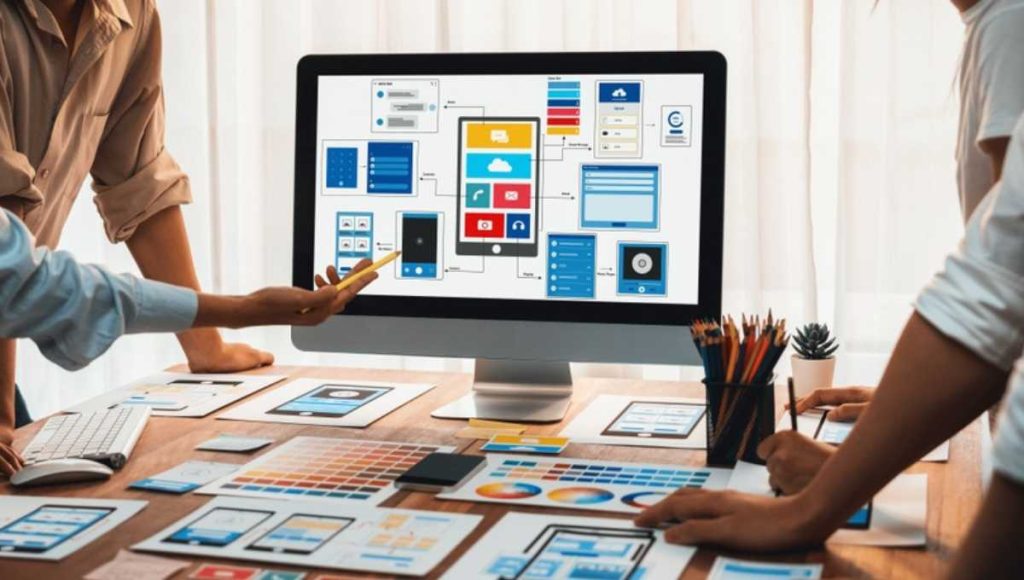
Selecting the right MVP app maker is crucial for startup success. We will explore the significance of finding the perfect MVP development agency and its services. By partnering with Codistan, you can pave the way for your product idea’s successful realization. 1. Choose an Experienced MVP Development Agency When turning your innovative startup idea into a tangible reality, An experienced MVP development agency like Codistan can be your strongest ally in bringing your concept to life. With their expertise in MVP development, they streamline the process and minimize risks, allowing you to reach the market faster. Role of an MVP Development Agency MVP development agencies, like Codistan, play a crucial role as skilled guides in your entrepreneurial journey. They possess technical know-how and industry insights to shape your concept into a viable product that meets your target audience’s needs. Benefits of Partnering with Codistan Choosing Codistan as your comprehensive MVP development company offers numerous advantages for startups. From strategic planning to efficient development and project management, they provide end-to-end solutions, allowing you to focus on your core business activities. Codistan’s diverse team of experts and experience in building MVPs for various industries make them a perfect fit for your product vision and goals. 2. Evaluate Their Experience When choosing the right MVP app maker for your startup, experience plays a pivotal role. Seasoned MVP development agencies like Codistan bring valuable expertise to the table, navigating the complexities of app development with finesse. Their know-how ensures a smoother process and a refined end product. Assessing the Track Record and Portfolio of Potential App Makers Before finalizing your choice, take the time to assess the track record and portfolio of potential app makers. Look for success stories, case studies, and client testimonials that showcase their ability to deliver successful MVPs. Codistan’s proven track record speaks for itself, reflecting its commitment to excellence. Looking for Expertise in Similar Startup Projects An MVP app maker with experience in similar startup projects can better understand your unique requirements and challenges. Codistan’s expertise in diverse industries allows them to tailor solutions that align with your startup’s vision and goals. 3. Discuss Operational Systems Effective communication and collaboration are vital for the success of MVP development. Codistan ensures seamless interaction between their team and your startup, promoting transparency and efficient project management. Inquiring About Development Methodologies and Tools Used By discussing development methodologies and tools used by potential app makers, you gain insight into their efficiency and approach. Codistan employs the latest tools and follows best practices to ensure a streamlined development process. Ensuring Alignment with Your Startup’s Operational Systems Harmonizing your startup’s operational systems with the app maker’s processes is essential for a successful partnership. Codistan ensures smooth integration with your existing systems, ensuring minimal disruptions during development. 4. Consider React Native as a Cost-Efficient Solution When choosing the right MVP app maker, consider the cost-efficient solution of React Native. This robust framework allows startups to build cross-platform apps with a single codebase, significantly reducing development time and costs. With React Native, Codistan can craft high-quality apps that work seamlessly on iOS and Android devices. Viability of React Native with Potential App Makers Engage in discussions with potential app makers about the viability of React Native for your startup’s MVP. Codistan’s experienced team can assess your app’s requirements and advise on whether React Native aligns with your project’s needs and goals. Balancing Time, Cost, and Quality with React Native With React Native, you can strike the perfect balance between time, cost, and quality. Codistan ensures that your MVP development stays on schedule, within budget, and maintains a high-quality standard to meet user expectations. 5. Contact the Agency and Discuss Pricing Take the initiative to contact shortlisted MVP app makers, including Codistan, to explore their services further. Initiating communication allows you to gauge their responsiveness and professionalism. Requesting Detailed Project Estimates and Timelines Request detailed project estimates and timelines from Codistan, your chosen MVP development agency. Codistan provides transparent and comprehensive information to help you make informed decisions. Clarifying Pricing Structure and Payment Terms Understanding the pricing structure and payment terms is crucial. Codistan ensures transparency in pricing, providing you with a clear breakdown of costs and flexible payment options to suit your budget. 6. MVP Development Timeline The MVP development timeline is critical to consider when selecting the right app maker for your startup. Engage in detailed discussions with potential app makers to understand the estimated timeframe for developing your MVP. Codistan’s experienced team can provide insights into the necessary development stages and expected timeframes. Different Timelines Among Companies MVP development agencies may offer varying timelines based on expertise, resources, and project complexity. Take the time to compare the timelines various companies provided to make an informed decision that aligns with your startup’s goals. Conclusion Choosing the right MVP app maker for your startup is a decision that can significantly impact its success. By considering factors like the benefits of React Native, discussing pricing, and evaluating the development timeline, you can make an informed choice. Codistan, as an experienced MVP development agency, offers tailored solutions that align with your startup’s unique vision and goals. With Codistan as your trusted partner, you can transform your innovative idea into a fully functional MVP, setting your startup on the path to success.
Landing Page MVP for Product Validation
In the ever-evolving landscape of product development and entrepreneurship, startups and businesses face the critical challenge of validating their ideas before fully committing resources to bring a product to life. This is where the Landing Page MVP (Minimum Viable Product) comes into play, offering a powerful tool for swift and efficient product validation. What is a Landing Page MVP? A Landing Page MVP is a simplified version of a product or service presented as a single web page with a laser-focused purpose: to capture user interest and collect valuable feedback. The primary goal of a Landing Page MVP is to test the market’s response to a product idea with minimal investment in development and resources. Key Elements of an Effective Landing Page MVP 1. Concise Value Proposition A clear and compelling value proposition is crucial for conveying the product’s unique benefits to potential customers. The Landing Page MVP should briefly address the problem it solves and why it’s the best solution. 2. Engaging Visuals Eye-catching graphics and design play a significant role in capturing the user’s attention. A well-designed Landing Page MVP enhances the overall user experience and fosters a positive impression of the product. 3. Persuasive Copy The content on the Landing Page MVP must be clear, concise, and tailored to resonate with the target audience. It should communicate the core message effectively, encouraging visitors to take the desired action. 4. Call-to-Action (CTA) A prominent and compelling CTA directs users to the desired action, such as signing up for a mailing list, subscribing to updates, or participating in a beta test. The CTA should be strategically placed for maximum impact. 5. Minimal Features A Landing Page MVP should only include essential features necessary to showcase the product’s value. Avoid overwhelming users with unnecessary complexity. 6. Contact Information Providing contact details or a form for user feedback allows visitors to express interest, ask questions, or offer suggestions, enabling valuable two-way communication. 7. Mobile Responsiveness Ensuring the Landing Page MVP is mobile-friendly is essential, as many users access the internet through their mobile devices. 8. Analytics Integration Implementing analytics tools allows entrepreneurs to track user behavior and gather data for future improvements. Why Use a Landing Page MVP for Product Validation? Advantages of the MVP Approach The Landing Page MVP provided by Codistan offers several advantages for product validation: Rapid Market Validation Our Landing Page MVP allows entrepreneurs to swiftly test their product concept in the market, without knowing genuine demand. Cost-Effectiveness Utilizing our Landing Page MVP is a budget-friendly alternative to building a complete product upfront, saving time and money. Time Efficiency Codistan’s Landing Page MVP can be launched within days, providing valuable insights quickly. Creating Your Landing Page MVP Identifying Your Target Audience Understanding the target audience is essential for crafting an impactful Landing Page MVP. Crafting a Compelling Value Proposition We help entrepreneurs to craft a compelling value proposition that communicates the product’s unique benefits to visitors. Design and Graphics Essentials Codistan ensures that the Landing Page MVP’s design and graphics are appealing and professional, effectively captivating users. Writing Engaging and Persuasive Copy Codistan’s skilled team creates an engaging and persuasive copy, conveying the product’s value and encouraging visitors to take action. Implementing an Effective Contact Form Codistan incorporates an effective sign-up or contact form into the Landing Page MVP, capturing potential customer information for future engagement. Incorporating a Special Offer If relevant, Codistan helps incorporate a special offer that can incentivize visitors to take immediate action, increasing conversion rates. Testing and Validating Your Landing Page MVP Once you have launched your Landing Page MVP with Codistan, the next crucial step is to test and validate its effectiveness. This phase involves collecting valuable data and feedback to make informed decisions and improve your product concept. Codistan offers comprehensive testing and validation strategies to ensure your Landing Page MVP is on the right track. Conducting A/B Tests Codistan’s A/B testing approach allows you to experiment with different versions of your Landing Page MVP. By testing design, copy, or CTA placement variations, you can identify which elements resonate best with your target audience and optimize your page accordingly. Analyzing User Behavior and Feedback Understanding how visitors interact with your Landing Page, MVP is vital for refining its performance. Codistan provides detailed analytics to track user behavior, such as click-through rates, time spent on the page, and bounce rates. Additionally, gathering user feedback through contact forms or surveys helps capture valuable insights. Measuring Conversion Metrics Codistan helps you measure essential conversion metrics, such as sign-ups, subscriptions, or purchases, to evaluate the success of your Landing Page MVP. By analyzing conversion rates, you can determine the effectiveness of your CTA and overall user engagement. Iterating and Improving Your MVP With Codistan’s support, you can continuously iterate and improve your Landing Page MVP based on the data-driven insights obtained from testing and validation. This iterative approach ensures that your product concept aligns with user expectations and market demands. Best Practices for Landing Page MVPs Codistan emphasizes best practices to enhance the performance of your Landing Page MVP. By following these guidelines, you can optimize the user experience and increase the likelihood of converting visitors into potential customers. Clear Call-to-Action (CTA) Placement Mobile Responsiveness and Page Load Speed Integrating Analytics and Conversion Tracking Freedom to make any changes to the product at any time Utilizing Social Proof and Testimonials Addressing Privacy and Security Concerns Conclusion Codistan’s Landing Page MVP solution offers a comprehensive approach to validate your product idea efficiently and effectively. By leveraging A/B testing, analyzing user behavior, and implementing best practices, you can confidently iterate and improve your product concept. Codistan empowers entrepreneurs to make data-driven decisions, ensuring a successful path toward a full-scale product launch. Embrace the power of Landing Page MVPs with Codistan and embark on a journey of innovation and growth.
MVP vs POC vs Prototype: What’s the Difference?
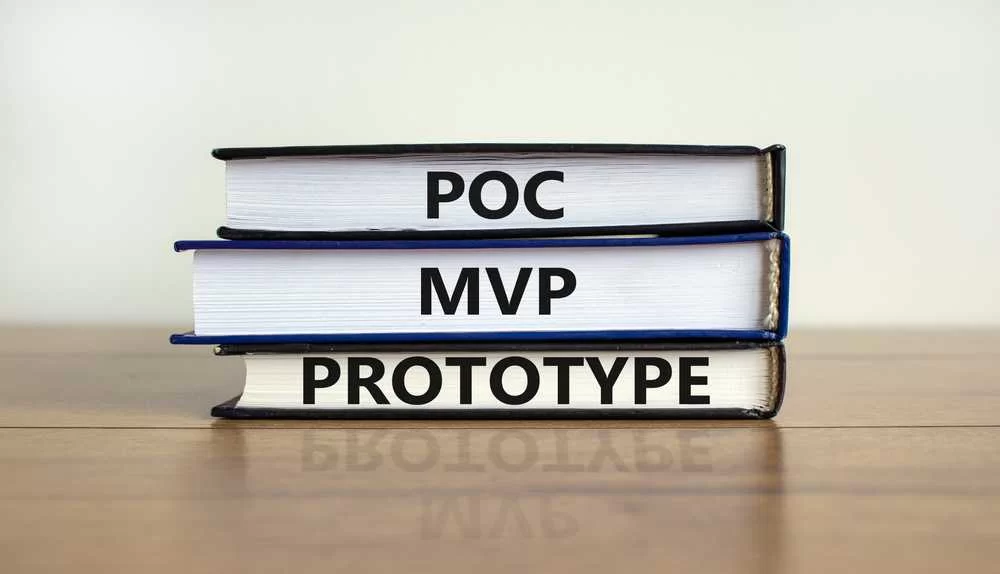
In product development, Proof of Concept (PoC), prototype, and Minimum Viable Product (MVP) are essential terms that hold significant importance. They are used to test and validate ideas before investing substantial resources into a full-fledged product. We will cover the concepts of PoC, prototype, and MVP by highlighting their features, differences, and how they function within the product development lifecycle. What Is Proof of Concept (PoC)? Proof of Concept (PoC) is a preliminary demonstration or test of a product idea or technology to ascertain its feasibility and practicality. The primary objective of a PoC is to determine whether a concept can be transformed into a viable product. PoCs are typically carried out on a small scale, with limited resources and functionality. How a Proof of Concept Works A PoC involves creating a basic version of the product or technology that showcases the core idea and its potential. This stripped-down version allows developers and stakeholders to identify potential technical challenges and evaluate whether the concept aligns with the desired objectives. Features of a Proof of Concept 1. Limited Scope: PoCs are designed with a narrow focus, aiming to validate specific aspects of the concept rather than presenting a complete solution. 2. Low-Fidelity: PoCs often have a rudimentary design and lack extensive features, as their purpose is to demonstrate feasibility rather than aesthetics or functionality. 3. Quick Development: PoCs are rapidly developed to minimize time and resource investment, enabling stakeholders to make informed decisions promptly. Reasons to Use a Proof of Concept (PoC) Risk Mitigation A PoC helps identify potential technical challenges and risks early in the development process, allowing teams to address them before investing significant resources. Feasibility Assessment It enables businesses to assess the viability of their ideas and concepts before committing to full-scale development. Cost-Effectiveness PoCs are less resource-intensive than fully developed products, making them a cost-effective way to test ideas and gather feedback. Market Validation By testing a PoC with a select group of users, businesses can validate the product’s potential demand and make data-driven decisions. PoC Best Practices Clearly Define Objectives Set specific goals and objectives for the PoC to ensure it focuses on key aspects and answers critical questions. Keep It Simple Limit the scope of the PoC to its core features and functionalities, avoiding unnecessary complexities. Define Success Criteria Establish measurable success criteria to determine whether the PoC has achieved its objectives. Involve End-Users Gather feedback from potential end-users to understand their needs and expectations. What Is a Prototype? A prototype is an early, preliminary version of a product, system, or application developed to validate and test design concepts, functionalities, and interactions. It serves as a tangible representation of the final product, allowing stakeholders, designers, and developers to gather feedback, make improvements, and identify potential issues before moving forward with full-scale development. How Prototyping Works The process of prototyping involves several stages: 1. Conceptualization: During this phase, ideas and concepts are brainstormed, and the initial design is outlined. This is where the core features and functionalities of the product are defined. 2. Design and Development: With the concept in place, the team creates a rough product version using various tools and technologies. This may involve creating wireframes, sketches, or low-fidelity mockups to visualize the user interface and interactions. 3. Building the Prototype: Based on the design, the prototype is developed. Depending on the complexity and objectives, this could be a paper prototype, a digital prototype, or a physical model. 4. Testing and Iteration: Once the prototype is ready, it is tested by end-users, stakeholders, or a focus group. Feedback is collected, and necessary changes are made to enhance the prototype’s functionality and user experience. Types of Prototype Models Low-Fidelity Prototypes These are basic, simple representations of the product, often created using paper, sketches, or digital wireframes. They are used to test and validate early-stage design ideas quickly. High-Fidelity Prototypes These prototypes are more detailed and closely resemble the final product in terms of design and interactions. They are often used for in-depth usability testing and gathering specific feedback. Functional Prototypes These prototypes have limited functionality, showcasing the core features that need validation. They may be used to test critical technical aspects of the product. Physical Prototypes Used mainly in industrial design, physical prototypes are three-dimensional models that provide a real-world representation of the product’s form and aesthetics. Features of Prototype Partial Functionality Prototypes offer a subset of the final product’s functionality to focus on specific aspects that require validation. Interactivity Prototypes allow users to interact with the product, providing a more realistic and immersive experience for testing. Rapid Development Prototypes are developed quickly and efficiently to facilitate early testing and feedback. Visual Representation They visually demonstrate the design and layout of the product, aiding stakeholders in visualizing the result. Reasons to Use Prototypes Early Feedback Prototypes allow stakeholders and end-users to provide feedback and suggestions before investing heavily in full development. Cost and Time Savings Identifying issues and making changes during the prototype phase is much more cost-effective than doing so after the product has been fully developed. Risk Mitigation Prototypes help uncover potential risks and challenges early in the process, reducing the likelihood of expensive mistakes during development. Improved User Experience By testing the prototype with users, designers can identify usability issues and optimize the user experience. Example of a Prototype Let’s consider a fictional example of a new mobile app designed to help users track their fitness goals and provide personalized workout plans. In this case, the prototype would involve: Low-fidelity wireframes showcasing the app’s main screens and navigation flow. Basic interactivity allows users to simulate navigating through the app and accessing different features. Partial functionality, such as allowing users to set fitness goals and select workout preferences. Through user testing and feedback on the prototype, the development team can refine the app’s design, usability, and features before proceeding with full-scale development. What Is a Minimum Viable Product (MVP)? A Minimum Viable Product (MVP) is the simplest version
